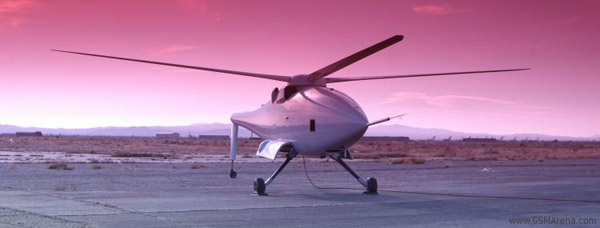
Step forward one of the latest pieces of hardware to grace the US military, Boeing’s A160 Hummingbird, a UAV helicopter drone endowed with a mammoth 1.8 gigapixel color video camera.
In truth the Hummingbird is not the last word in helicopter drones for the US military, but rather just Boeing’s submission. Other companies will be able to bid on future manufacturing contracts involving their own heli-drone designs down the line, but in the meantime Boeing have produced the latest and greatest.
The army say the technology promises “an unprecedented capability to track and monitor activity on the ground”. From altitudes as high as 20,000 feet (6.1km) in the air and across a distance of almost 65 square miles (168 sq km), the 1.8 gigapixel video sensor is the largest to be used on tactical missions.
The surveillance capability on board, dubbed Argus-IS (or Autonomous Real-time Ground Ubiquitous Surveillance-Imaging System for
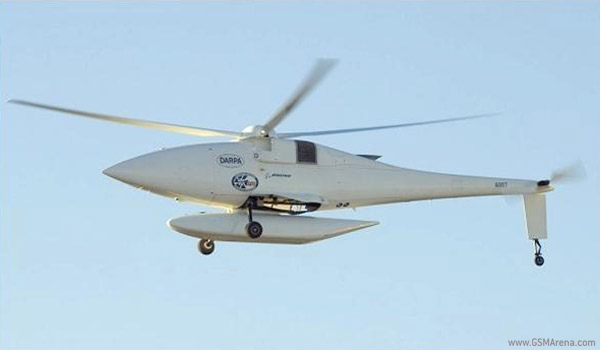
Following the drone’s test flights in Arizona, scheduled for the first part of this year, they will then see active service in Afghanistan by May or June. Lieutenant Colonel Matthew Munster, product manager for the US Army’s Unmanned Aerial System Modernization unit explains, “These aircraft will deploy for up to one full year as a way to harness lessons learned and funnel them into a program of record”.
Beyond the obvious benefits of the advance imaging and sensory technologies at work here, the practical benefits of a helicopter drone over a typical winged drone are much the same as with fully-fledged helicopters and planes, the ability to take off vertically and by association the lack of need for a runway. The A160 will be able to take off and land in more challenging terrain and be able to reach more difficult environments as a result.
The techno-wizardry doesn’t stop there however, as DARPA (The US Defense Advanced Research Projects Agency) and UK-based contractors BAE Systems are already working on improving the Argus-IS with night vision technology and upping the aforementioned ‘window’ number to 130, with tests of this newer system taking place in June.
Now take note and watch the skies, because they might start watching you soon.
courtesy: gsmarena.com



0 comments:
Post a Comment
Your comments are appreciated.
Feel free to drop them and I will get back to you as soon as possible. Thanks.